Which bank should you exchange dollars at?
Buy or sell rate, why banks don't pay the Central Bank rate, how much you save by comparing and where to see today's rate at every bank in Costa Rica.

Not every bank pays the same for a dollar. Each bank, credit union and exchange house sets its own buy and sell price, and the difference between them can be several colones per dollar. On large amounts, choosing where to exchange well means thousands of colones of difference.
First: buy or sell?
- If you have dollars and want colones, you care about the buy rate: it's what the bank pays you for each dollar. Look for the highest.
- If you need dollars (for a trip, a payment or a purchase), you care about the sell rate: it's what the bank charges you for each dollar. Look for the lowest.
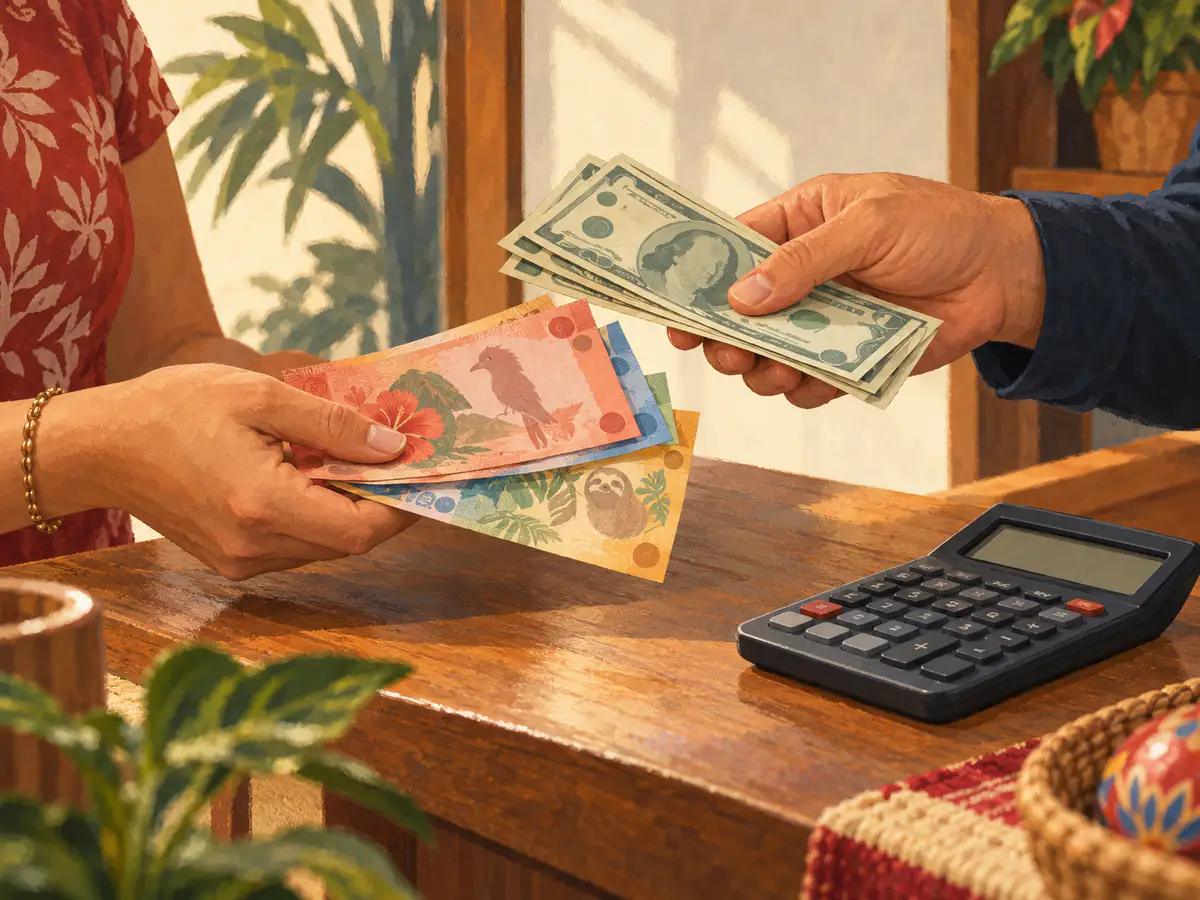
Why doesn't the bank pay the Central Bank rate?
The Central Bank of Costa Rica (BCCR) publishes a reference exchange rate every day. It's an average that works as a guide, but it isn't the rate you get at the counter. Each institution buys a little below and sells a little above that value: the difference between its sell and buy price is called the spread, and it's part of its profit.
For example, on October 30, 2026 the BCCR reference was ₡450.80 to buy and ₡455.44 to sell. That same day, banks were buying dollars at between ₡440 and ₡447 and selling them at between ₡457.70 and ₡464. The spread ranged from about ₡12.50 to ₡24 depending on the bank.
How much can you save by comparing?
At the October 30 rates, someone exchanging $500 into colones got ₡223,500 at the bank paying the most (₡447 per dollar) and ₡220,000 at the one paying the least (₡440): a ₡3,500 difference. And someone buying $500 paid ₡228,850 at the cheapest bank (₡457.70) against ₡232,000 at the most expensive (₡464): a ₡3,150 difference.
Rates change every day, and sometimes during the day. That's why it pays to check right before you go.
Where can I compare today's rates?
Our exchange rate by bank table shows the rates every bank, mutual, credit union and exchange house reports to the Central Bank, with the day's best rate marked in green. Each institution also has its own page, for example Banco Nacional, Banco de Costa Rica, BAC Credomatic or Davivienda, with its rates over recent days.

Tips before you exchange
- Ask about the rate in the app or online banking. Some institutions offer a different rate than at the counter for exchanges between your own accounts.
- For large amounts, ask whether the rate is negotiable. Some institutions improve the rate for large sums.
- Only exchange at authorized institutions. Authorized banks, mutuals, credit unions, finance companies, brokerages and exchange houses appear on the Central Bank's official list. Avoid street money changers: there's no guarantee on the money you get.
- Count the money at the counter and keep the receipt.
This article is for information only. The example rates are from October 30, 2026; check today's rates in our table or directly with each institution.